Leading rigid boxes machine Manufacturer

Is Your Packaging Business Ready for a Market Downturn?
Time: 2025-12-19 11:23:05
Author: Kylin machine company
Click:
Worried about market softness and shrinking margins? Even industry giants are fo
Worried about market softness and shrinking margins? Even industry giants are forced to restructure. Let’s see what their strategy can teach us about building a more resilient business.
To prepare for a downturn, focus on core strengths and operational efficiency. Design Group’s recent move to shed a loss-making unit shows that simplifying your business and controlling costs are key survival tactics. This ensures you can weather market pressures and improve profitability.
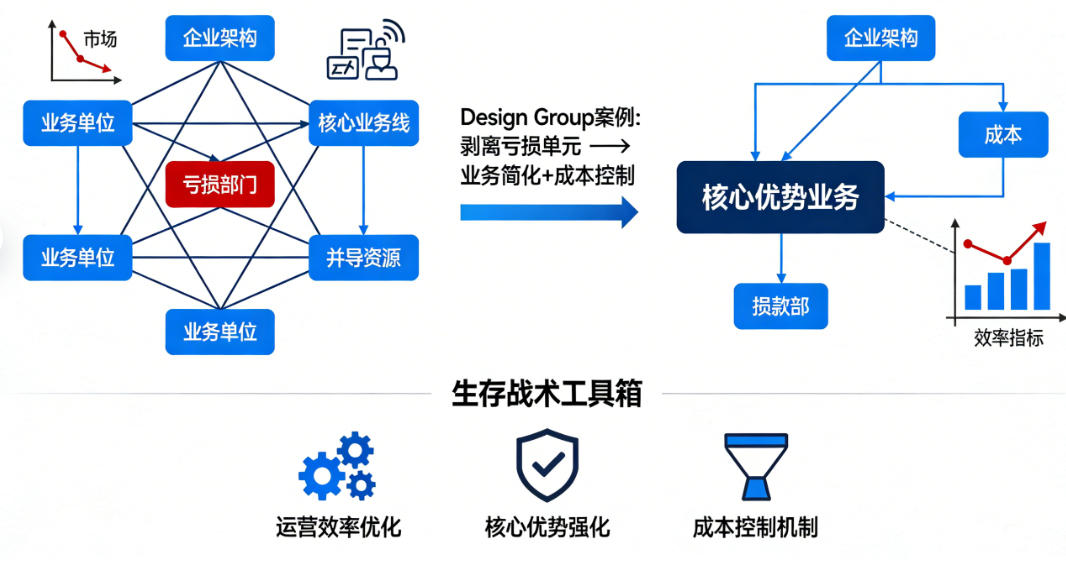
It’s one thing to hear about a big company making changes, but it’s another to understand the real reasons why. The story behind Design Group’s big move is a lesson for all of us in the packaging industry. Let’s dig into the details to see what really happened.
Why Did a Major Player Exit the US Market?
Is one part of your business constantly underperforming? Holding onto it can drain profits and energy. Design Group’s exit from the US shows that decisive action is sometimes necessary.
Design Group sold its US business because it was unprofitable, creating a massive $150.4 million loss. This move, though radical, was necessary to stop the financial drain and allow the company to focus on its stronger, more profitable regions in the UK, Europe, and Australia.
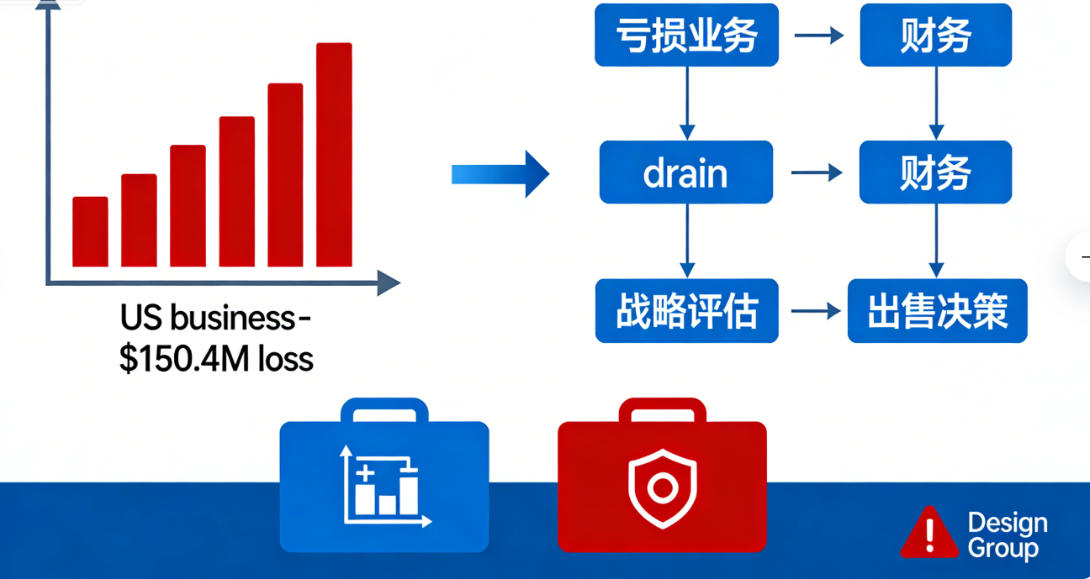
The decision to exit a market as large as the US is never easy. For Design Group, it was a clear case of strategic retreat. The American business wasn’t just underperforming; it was a significant drain on the entire organization. This move teaches us a critical lesson about complexity and focus.
The Weight of Complexity
Managing a global business is incredibly complex. Each region has its own challenges. The report mentioned “softer UK demand” and “pricing pressure in Europe.” When you add a large, loss-making division on another continent, it stretches management resources thin. By selling the US wing, the leadership team can now dedicate their full attention to stabilizing and growing their core, profitable markets. It’s a classic case of addition by subtraction.
External Market Pressures
The report also cited the impact of US tariffs. This is a perfect example of an external factor that can cripple a business segment. Sometimes, no matter how well you operate, market or political forces are too strong to fight. Recognizing this and cutting your losses is a sign of strong leadership, not failure.
| Factor | Before the Sale | After the Sale |
|---|---|---|
| Geographic Focus | Global, including unprofitable US unit | UK, Europe, Australia |
| Management Focus | Divided between growth and crisis | Focused on core profitable markets |
| Financial Health | Weighed down by $150M+ loss | Lighter, more stable financial base |
| Complexity | High | Reduced and more manageable |
This strategic pivot allows them to build a stronger, more focused company for the future.
How Can Efficiency and Cost Control Save Your Margins?
Are rising costs and customer demands for lower prices eating into your profits? You can’t control the market, but you can control your production floor. Let’s explore proven efficiency strategies.
Efficiency saves margins by reducing labor costs, minimizing material waste, and increasing output. Design Group is focusing on this now. For a box maker, this could mean upgrading to automated machinery that combines multiple steps, ensuring you produce more with less, directly boosting your bottom line.
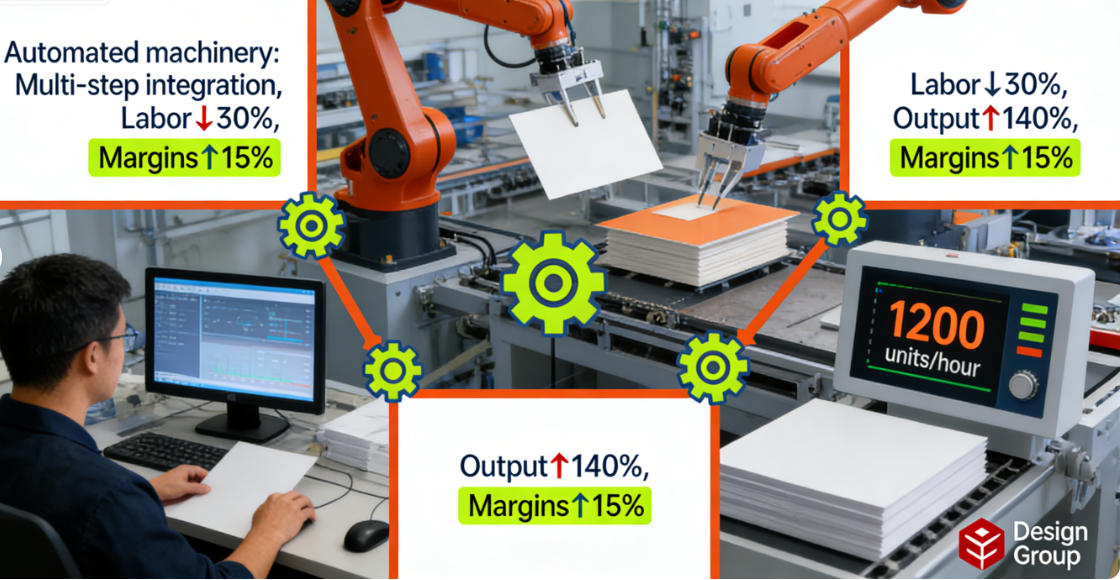
Design Group’s new strategy revolves around “operational efficiency, margin improvement and cash generation.” This is a language every factory owner understands. In my years of visiting packaging and printing plants around the world, I have seen that the most successful businesses live by this principle. It’s not about cutting corners; it’s about making smart investments in technology that pays for itself.
The Role of Technology
I often see companies struggling with old, labor-intensive processes. For rigid box production, this might be a manual line for positioning the paper wrap onto the box. It’s slow, requires many workers, and quality can be inconsistent. This is where modern automation becomes a game-changer. A machine like our Kylin-1000S Robotic Arm Spotter can transform a production line. It uses advanced robotics to achieve perfect placement at high speeds, every single time.
A Practical Comparison
Let’s compare the two approaches for producing luxury boxes:
| Metric | Manual Spotting Line | Automated Robotic Spotter |
|---|---|---|
| Workers Needed | 5-7 operators | 1-2 operators |
| Speed (pieces/min) | 10-15 | 25-35 |
| Accuracy | Variable, depends on operator skill | Consistently high (e.g., ±0.1mm) |
| Margin Impact | High labor costs, potential for waste | Lower labor costs, less waste, higher output |
Investing in efficiency isn’t an expense; it’s a direct path to better margins and a stronger, more competitive business.
What Does a “Less Complex Business” Mean for You?
Do you feel like your business is pulled in too many directions? This complexity can hide inefficiencies and prevent growth. Let’s discuss how simplification can become your biggest competitive advantage.
A “less complex business” focuses on its most profitable products and streamlines how they are made. Instead of offering everything, you perfect a core set of offerings. This allows you to optimize your production lines, reduce changeover times, and become a true expert in your niche.
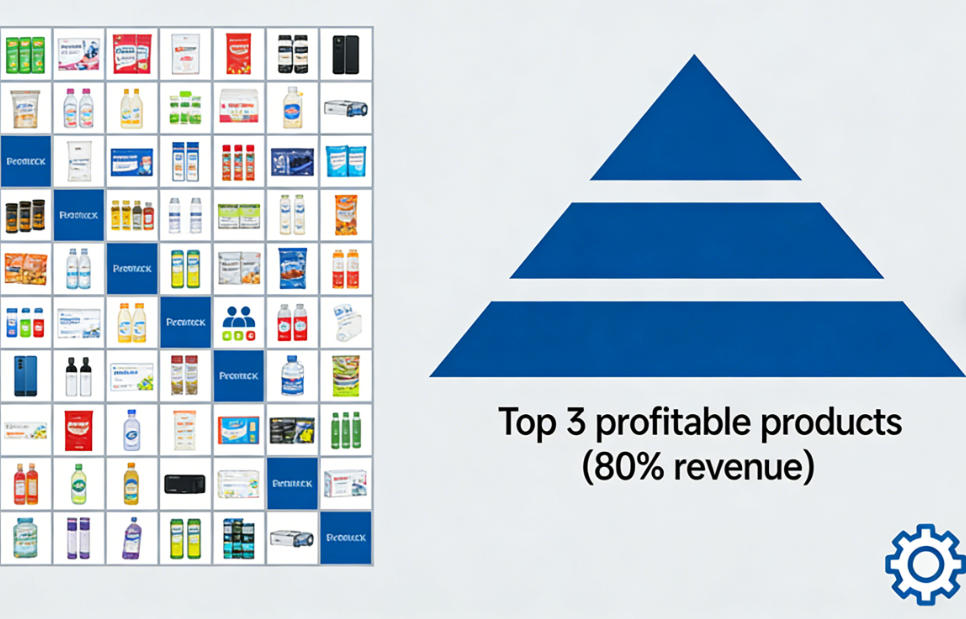
The new interim executive chair at Design Group stated they are now entering the next period “as a less complex business.” This is one of the most powerful concepts for any manufacturing company. From my experience, the businesses that thrive are not always the ones that do everything, but the ones that do a few things exceptionally well.
Focusing Your Product Line
Look at your own product catalog. Are there items that are complex to make, have low margins, and are rarely ordered? These products add complexity to your operations. They require different machine setups, unique materials, and special training. By eliminating or outsourcing them, you can dedicate your factory to what it does best. This focus allows you to become faster and more cost-effective in your core business, whether that’s luxury rigid boxes, book covers, or another specialty.
Investing in Versatile Solutions
Simplifying your business does not mean limiting your customers’ options. It means investing in flexible technology that can handle variety without adding complexity. For example, a modern Automatic Case Maker can produce a wide range of hard book cover sizes. The changeover from one size to another is fast and programmed, not a complex manual task. This allows you to offer customization and variety efficiently. The goal is to find machinery that simplifies your workflow while still giving your clients the high-quality, varied products they need.
Conclusion
Design Group’s journey reminds us that market challenges are inevitable. The key to survival and growth is focusing on operational efficiency, simplifying your business, and investing in the right technology.

点击右上角
分享给朋友吧







 Long by picture save/share
0
More News
-

How do post-pres...
Are your orders piling up? Slow packing ruins your good name. Customers leave yo
MORE -
Is Epson’s New A...
Struggling with limited space but need to expand your printing capabilities? Eps
MORE -
Is Xerox’s Lates...
Struggling to keep up with printing demands? You’re not alone. Many businesses f
MORE -
How Can a Bookle...
Are you struggling with production bottlenecks? Tired of slow turnaround times h
MORE -
Is Your Print Bu...
Your stitching line is slow, causing bottlenecks and missed deadlines. This inef
MORE -
Is Canon’s New P...
Struggling to meet the strict standards for traffic signs? It’s a tough market w
MORE